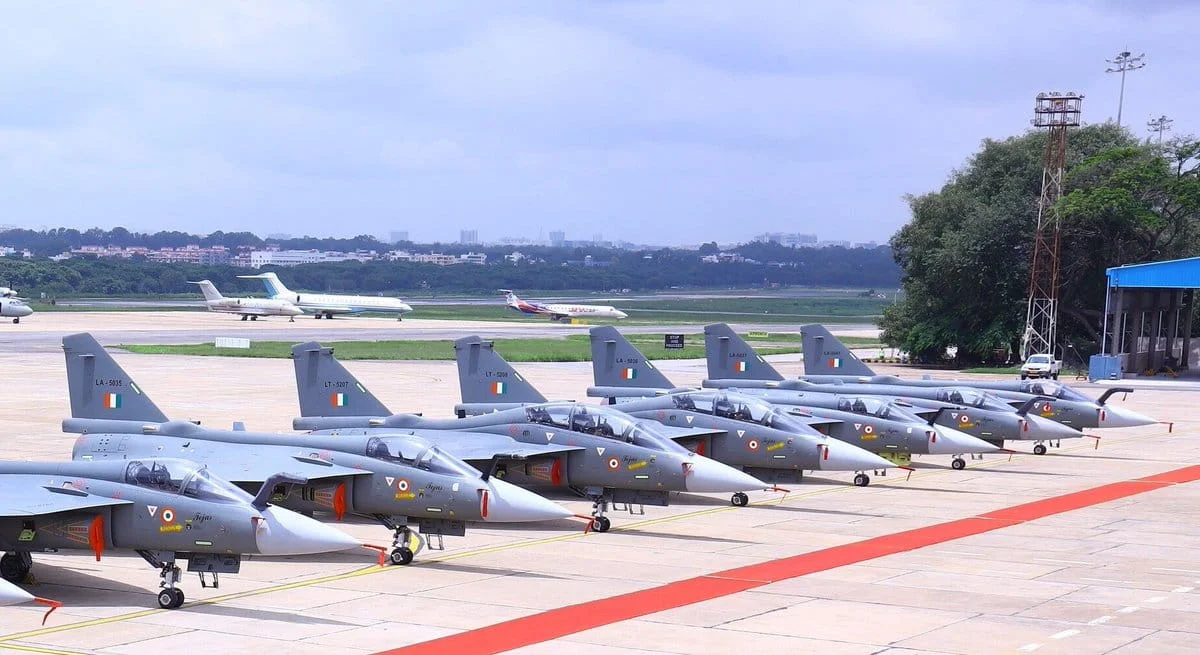
The Tejas Mk1A fighter jet program has received a significant boost after the Indian Air Force decided to ease certain contractual terms for Hindustan Aeronautics Limited. The move is aimed at accelerating production and ensuring faster induction of the indigenous light combat aircraft into operational squadrons.
This decision comes at a time when the IAF is working to strengthen its fleet strength and enhance combat readiness through indigenous platforms.
Why the Contract Relaxation Matters
The Tejas Mk1A is an upgraded variant of India’s Light Combat Aircraft program, offering improved avionics, enhanced radar capabilities and advanced electronic warfare systems. However, production timelines have faced challenges due to supply chain issues, integration complexities and global component delays.

By easing specific contractual clauses, the IAF aims to:
• Allow HAL greater operational flexibility
• Streamline procurement of critical components
• Reduce administrative bottlenecks
• Accelerate aircraft rollout schedules
This collaborative approach is expected to help speed up delivery commitments.

About the Tejas Mk1A
The Tejas Mk1A is designed as a multi-role lightweight fighter aircraft with modern features including:
• AESA radar system
• Beyond Visual Range (BVR) missile capability
• Advanced electronic warfare suite
• Mid-air refueling capability
Compared to earlier versions, the Mk1A variant focuses on improved maintainability and mission effectiveness.

HAL’s Role in the Program
HAL is responsible for manufacturing and delivering the aircraft under a major defense contract. The company has been expanding its production capacity, setting up additional assembly lines and strengthening supplier partnerships to meet delivery targets.
With the contract flexibility granted by the IAF, HAL is expected to better manage timelines and respond to unforeseen production constraints.

Strategic Importance for India
The acceleration of Tejas Mk1A deliveries supports India’s broader objective of self-reliance in defense manufacturing. Indigenous fighter programs reduce dependency on imports and strengthen long-term strategic autonomy.
For the IAF, faster deployment means quicker replacement of aging aircraft and improved operational preparedness across multiple theaters.

Expected Impact on Delivery Timeline
While official revised timelines have not been publicly detailed, defense observers believe the relaxed terms could help stabilize production flow and shorten delivery gaps. Increased coordination between the IAF and HAL may further enhance efficiency.
Industry and Strategic Outlook
The Tejas program has long been viewed as a cornerstone of India’s aerospace ambitions. A smoother production cycle for the Mk1A variant could also strengthen export prospects and build global confidence in India’s defense manufacturing ecosystem.
Final Thoughts
The decision by the Indian Air Force to ease contract terms reflects a pragmatic and cooperative approach toward achieving faster operational readiness. If implemented effectively, this step could significantly enhance the pace of Tejas Mk1A induction while reinforcing India’s push toward indigenous defense capability.